The structural cost of decentralized procurement.
A 90-minute live session for multi-site organizations. We walk through the case study and the trade-offs, and what one client recovered: more than €20 million across four sub-projects over ten years.
Friday 17 July 2026, 14:00 CET. Free.
Live in English. Recording sent to every registered participant.
Reserve your seat.
No payment, no obligation. One click to register through our webinar platform.
Register HereBy registering, you agree to receive the calendar invite, the live link, and the recording. We will not add you to a mailing list without your consent. Privacy.
When
Fri 17 Jul
2026
14:00–15:30 CET
08:00 New York · 20:00 Singapore
90 minutes, live, English
Four field lessons, one Q&A block, one clear next step. No slides for the sake of slides.
CIOs · CPOs · CFOs · Heads of Procurement
Multi-site companies with 1,000+ employees, where purchasing decisions still happen locally.
Recording · Slides · Audit template
All assets delivered after the session. Yours to share inside your team.
Free
No payment, no mailing list opt-in. Register, attend or get the recording.
Decentralized buying is a structural cost.
Each site funds its own overhead. Each supplier charges what each site will accept. Nobody is negotiating as one customer. The numbers below come from a real ten-year program at a global manufacturer with sites on four continents.
€20M+
total saved across four standardization sub-projects in 10 years.
25–50%
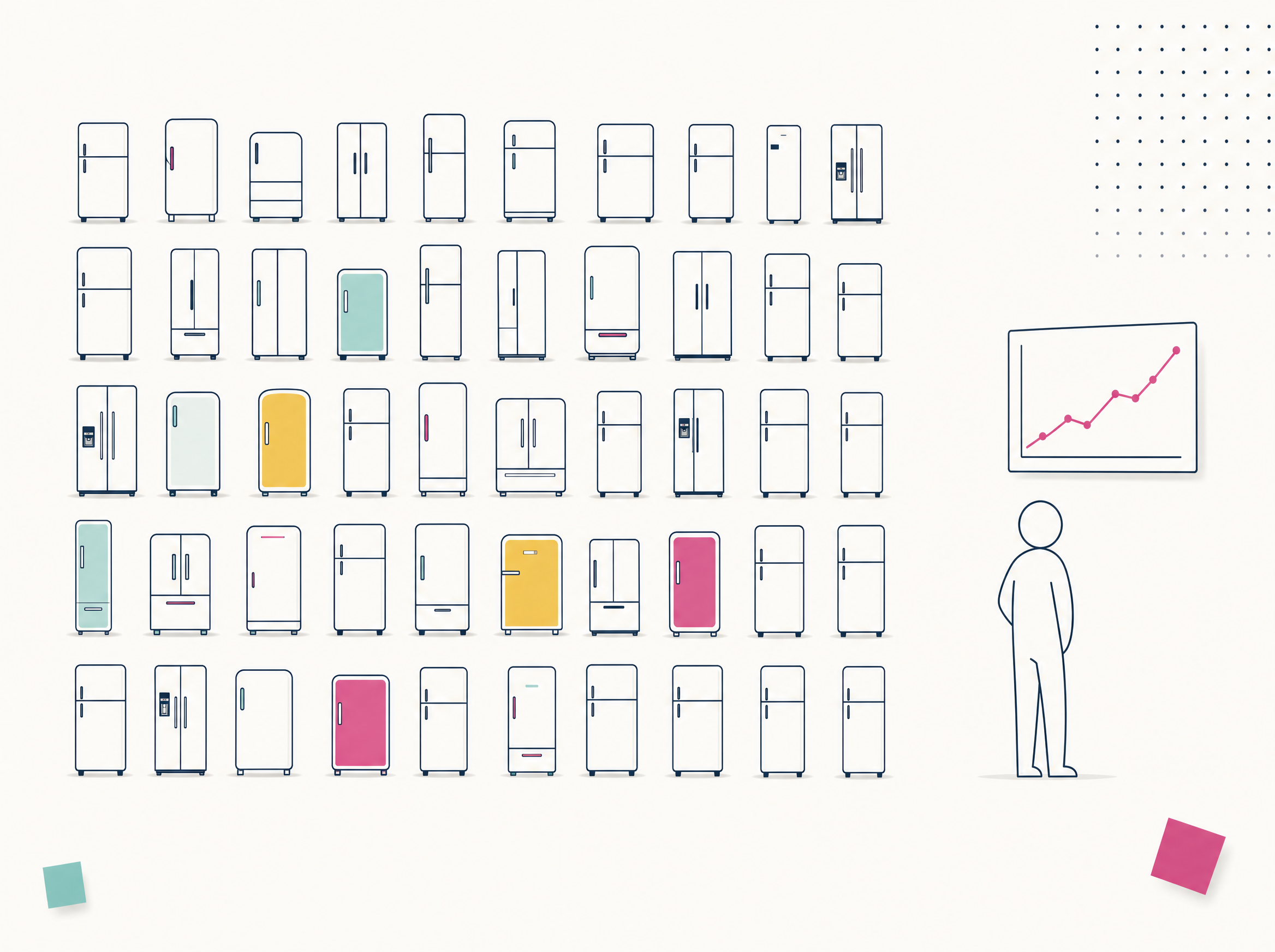
lower energy use after standardizing the fridge fleet — 49 machines, 33 models.
10–60%
cheaper at other dealers, on 80% of air-filter SKUs.
6
use-cases now cover the whole compressor fleet, instead of a sprawl of types.
What you walk out with.
Four lessons from our standardization engagements. Honest about what works, honest about what backfires.
Where the cost sits
The three concrete ways decentralized buying leaks margin. Overhead duplication. Asymmetric pricing. No global negotiating power. Why none of it shows up cleanly on the P&L.
The four trade-offs nobody warns you about
People losing decision power. Some regions getting pricier. Slow buying processes that kill the savings. Single-vendor risk. Each one anchored with a real case from the engagement.
Two ways to run a standardization project
Data-heavy versus trust-based. Six months to two years versus six to twelve. When to pick which, and why one ends in board-defensible savings while the other ends in faster cash.
A scoping framework for your own savings
Walk out with a defensible range for one of your indirect categories. We share the questions and the rough multipliers we use in a paid scoping call.
Built for the people on the hook for the cost cuts.
Not a procurement-101 webinar. A session for senior leaders running indirect spend across multiple sites or countries, where the board has already asked for the number.
CIOs at multi-site companies
Standardizing equipment, services and software across regions, while keeping local autonomy.
CPOs and Heads of Procurement
Recovering the post-signature value gap that local negotiation cannot reach.
CFOs sponsoring the cost program
Defending the 12-month spend reduction case to the board with anchored, real-world numbers.
Technical & operations directors
Owning the equipment portfolio, the maintenance contracts, and the standard owner roles.
We work as an extension of your team, not as a slide vendor.
Vienna-based consultancy focused on cost and value optimization for IT and supply chain. Outcome-based engagements: one accountable team, from first analysis to handover. We implement what we recommend.
25+
years of industry experience
500+
successful projects delivered
€3B+
in negotiated contract volume
10–40%
measurable cost savings for clients
Friday 17 July, 14:00 CET. 90 minutes. Free.
If your indirect spend feels heavier than the P&L suggests, the leak is probably in standardization. Reserve the slot. If you cannot attend, we will send the recording.